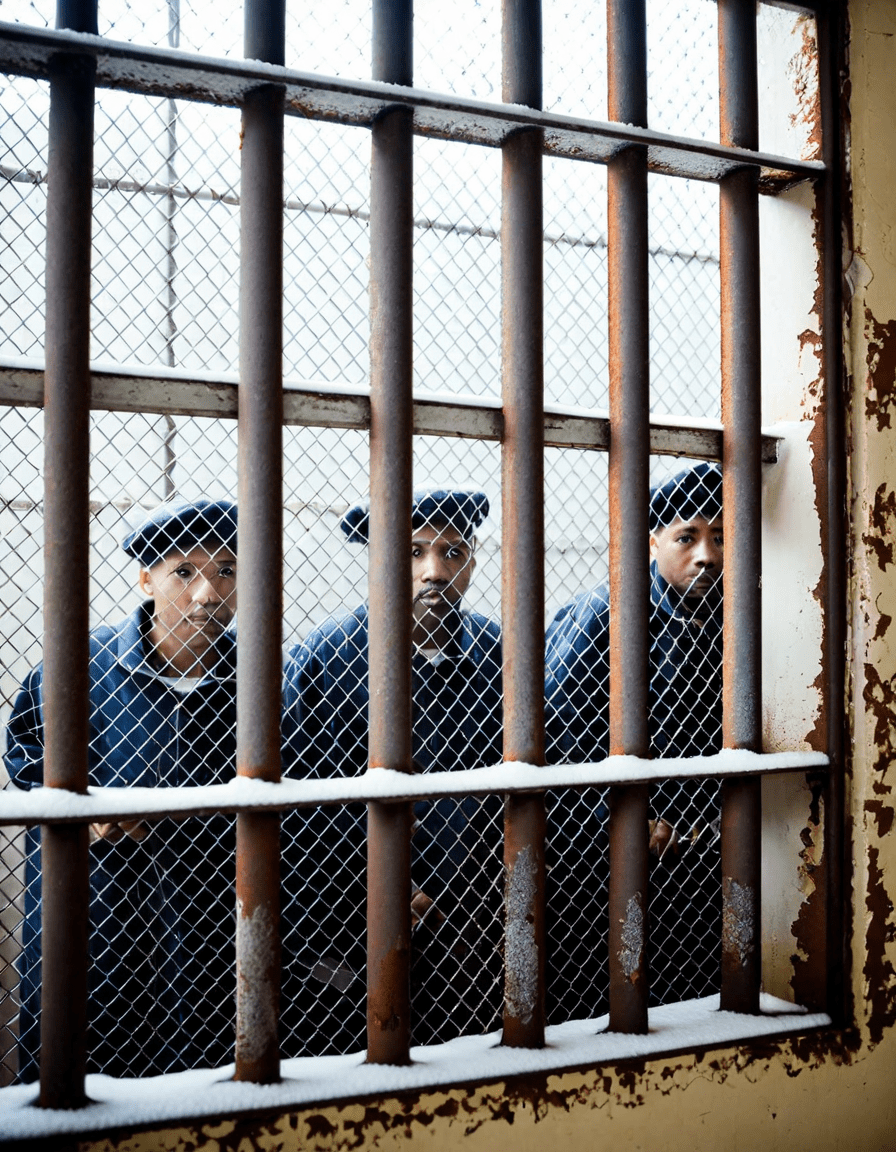
When you hear the name Sing Sing, you might picture the grim history of what many call America’s most notorious prison. Since its establishment in 1825, Sing Sing has shaped criminal justice and influenced public perceptions of crime and punishment in ways that are hard to ignore. This institution, situated on the banks of the Hudson River, stands as a stark symbol of America’s complex relationship with justice—one that reflects both the darkness of our past and the ongoing debates over rehabilitation and reform.
Sing Sing originally opened as a solution to overcrowding in New York City jails and quickly became a model for the American prison system. It’s important to note the architectural journey of Sing Sing, which mirrors the evolving philosophies of punishment. Early designs embraced harsh punishment, while recent updates have aimed to address rehabilitative needs. Significant events—like the execution of notorious criminals and high-profile riots—punctuate its history and contribute to a deeply fascinating, if chilling, narrative.
The infamous events surrounding Sing Sing have furnished it with a legacy of bloody tales and haunting stories. Over the decades, the prison has housed a slew of notorious inmates—from mob bosses to spies—each leaving an indelible mark on its storied walls. As we’ll explore, Sing Sing’s reputation for being tough is matched only by the legendary figures it has housed within its walls.
Sing Sing’s Infamous Inmates: A Look at the Top 7
Stroud’s life story has become almost mythological. Convicted for murder at 18, he became notorious not just for his crimes but for his later writings on bird care while incarcerated at Sing Sing. Stroud’s transformation into an author challenges the notion of punishment, opening discussions on mental health and rehabilitation.
The Rosenbergs’ trial during the height of the Red Scare resulted in their execution, a moment that highlighted fears of communism in America. Their time at Sing Sing shone a light on the paranoia of the era, presenting profound questions about loyalty, justice, and punishment during a time of societal upheaval.
Dubbed the “Gray Man,” Fish’s gruesome crimes left a mark of horror across the nation. His eventual execution in 1936 raised critical questions regarding mental health in the context of criminal justice. Fish’s case still resonates as it forces society to grapple with the implications of treating severe psychological issues within the corrections system.
Often referred to as the father of modern organized crime in America, Luciano’s time at Sing Sing enhanced his legendary reputation. Through strategic dealings and charm, he managed to maintain control over Mafia operations from behind bars, illustrating the complicated relationship between crime and captivity.
Berkowitz is perhaps best known for his brutal killing spree in the 1970s. After his capture, his time at Sing Sing marked a profound transformation as he converted to Christianity. His story demonstrates how the system can foster redemption, raising crucial questions about the potential for rehabilitation versus punishment.
Though notoriously associated with San Quentin, Manson’s brief period at Sing Sing speaks to the prison’s status as a hub of criminal notoriety. His time there, though short, represents the unpredictable nature of crime and consequences, challenging ideas around punishment.
The “Teflon Don” fought against law enforcement even while in prison. Gotti’s battles for control within the Mafia while behind bars illustrate the intertwined reality of crime and incarceration. His story adds complexity to the discussion on how effectively we can implement justice.

The Sing Sing Rehabilitation Programs: Pros and Cons
While Sing Sing has a brutal past, modern efforts have turned toward rehabilitation. The institution offers educational and vocational programs aimed at decreasing recidivism and preparing inmates for reentry into society. However, the efficacy of these initiatives is still up for debate.
Statistics show that inmates who participate in rehabilitation programs often experience lower recidivism rates compared to those who don’t. Programs providing education, therapy, and job skills have the potential to reduce repeat offenses, but the question remains—are these efforts sufficiently comprehensive?
Individual success stories, like that of a former inmate who reinvented himself as a community leader, underscore the potential for positive change through these programs. Yet the road to rehabilitation is complex and fraught with challenges, raising significant questions about the overarching goals of our penal system.
The Sociopolitical Impact of Sing Sing: Beyond Bars
The influence of Sing Sing extends far beyond its stone walls. It has contributed significantly to public perceptions of crime. The narratives formed by the infamous events within its bounds have helped shape dialogue about justice in America, often spurring debates surrounding sentencing reforms and humane treatment.
Political figures—ranging from reform-minded legislators to activists—have used Sing Sing as a platform to spotlight critical issues. High-profile inmates like the Rosenbergs and the varying narratives from Sing Sing have inspired discussions about justice reform, representation, and accountability.
Moreover, the prison has become a focal point in discussions about the future of sentencing reform. As more politicians now push for a humane approach to incarceration, Sing Sing represents a crossroads where stark realities confront the ideals of justice, rehabilitation, and public safety.
Current Reforms and the Future of Sing Sing
In recent years, substantial reforms at Sing Sing have aimed to address overcrowding and improve inmate conditions. The push for better healthcare access and staffing solutions represent vital steps in the right direction; however, challenges remain.
The future of Sing Sing seems to pivot toward more progressive attitudes about incarceration. With increasing calls for rehabilitation over punishment, we see a potential transformation from a holding ground for offenders to a center for criminal justice education.
Predictions suggest that Sing Sing could evolve into a place not simply for confinement but as a beacon for reform advocacy. By prioritizing rehabilitation and accountability, it could very well reshape how we view and address the issues of crime and justice in America.
Disturbing Statistics: The Dark Numbers Behind Sing Sing’s Legacy
To understand Sing Sing’s legacy, we must examine difficult statistics that reveal deeper truths. Significant percentages of incarcerated individuals are often from marginalized communities, amplifying discussions about equity within the justice system.
Recidivism rates remain troubling, signaling that our current methods may not sufficiently deter repeat offenses. While rehabilitation programs have shown promise, the overall efficacy needs more scrutiny to ensure that those opportunities reach the individuals who truly need them.
The numbers are stark—a stark reminder that while we’re striving for reform, the prison industrial complex affects many lives and does so disproportionately. Understanding these dynamics is crucial for developing policies that truly serve justice.
The Legacy of Sing Sing: A Cautionary Tale
As we look at the legacy of Sing Sing, we confront a microcosm of America’s broader criminal justice system. The stories of infamous inmates serve as cautionary tales, urging us to recognize the flaws within our approach—be it the draconian punishments of the past or present-day inequities.
It’s essential to reflect on history to craft informed policies that prioritize rehabilitation over mere incarceration. As we question the nature of punishment versus the pursuit of reform, we must remember that each individual reflects a piece of our humanity—and our responsibility to cultivate justice.
Looking toward 2026 and beyond, the legacy of Sing Sing serves as a critical conversation starter about how justice, punishment, and rehabilitation interact. The stories embedded in this infamous prison call us to recognize and reconcile our principles of justice while demanding a better future for all who fall under the shadows of its walls.
Sing Sing may be a dark legacy rooted in fear and punishment, but it can also illuminate pathways towards reform and hope in America’s evolving narrative surrounding justice. Let’s engage in this conversation earnestly, recognizing that the pursuit of justice should be as relentless as the narratives of those who once walked the halls of Sing Sing.
Sing Sing: Fascinating Facts From Its Dark History
A Unique Historical Journey
Sing Sing Prison, officially known as Ossining Correctional Facility, has a history that’s more colorful than a New York City skyline at sunset. Established in 1825, this infamous penitentiary housed some of America’s most notorious criminals. The prison’s notorious reputation stems not just from its infamous inmates, like the infamous mobster Aurelio Casillas but also from the brutal conditions that were once commonplace behind its gates. Interestingly, even in the heart of darkness, light sometimes cuts through—like the music of Norah Jones, who hails from nearby Brooklyn. Her soothing tunes offer a stark contrast to the somber tales of Sing Sing.
It’s fascinating how Sing Sing has made its way into pop culture. Even comedians like Carrot Top have used it as a punchline, showing how humor can emerge from even the darkest corners of society. The prison’s legacy reaches far and wide, reminiscent of historical figures like Pancho Villa, whose audacious exploits echo through time. Just like film buffs looking for the latest movie times, visitors to this prison have often been drawn to its notorious legacy and its role in shaping America’s criminal justice system.
A Legacy of Intrigue
Over the years, Sing Sing has had its share of remarkable events. Its death row was the last stop for many, where the electric chair was once a grim fixture. However, it isn’t just a site of sorrow; it has also been a place of rehabilitation and reform. This duality mirrors the simple game of rock paper scissors—representing the deafening conflict between freedom and confinement. Surprisingly, plenty of reform programs have tried to break the cycle of crime and recidivism within its walls, showcasing the efforts made to humanize those incarcerated.
For trivia lovers, it’s intriguing to note that Sing Sing has been a backdrop for various films and documentaries, emphasizing its role in popular culture. Just as audiences often watch films featuring characters reminiscent of real-life figures, Sing Sing’s storied past is itself a narrative filled with drama, redemption, and, in some cases, comedic relief—much like the antics of comedian Sam Hyde, who challenges the status quo. As this prison continues to evolve, its influence will likely linger, shaping discussions around prison reform and societal norms for years to come.