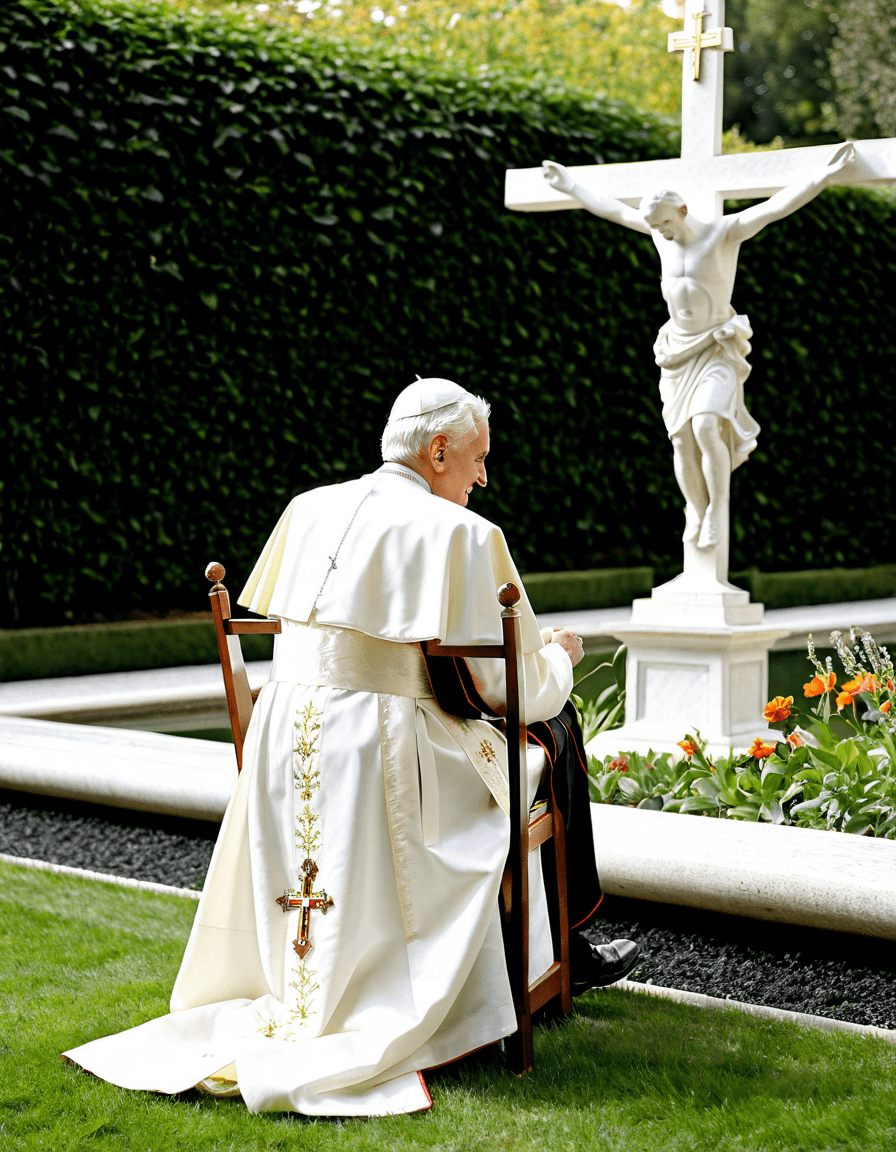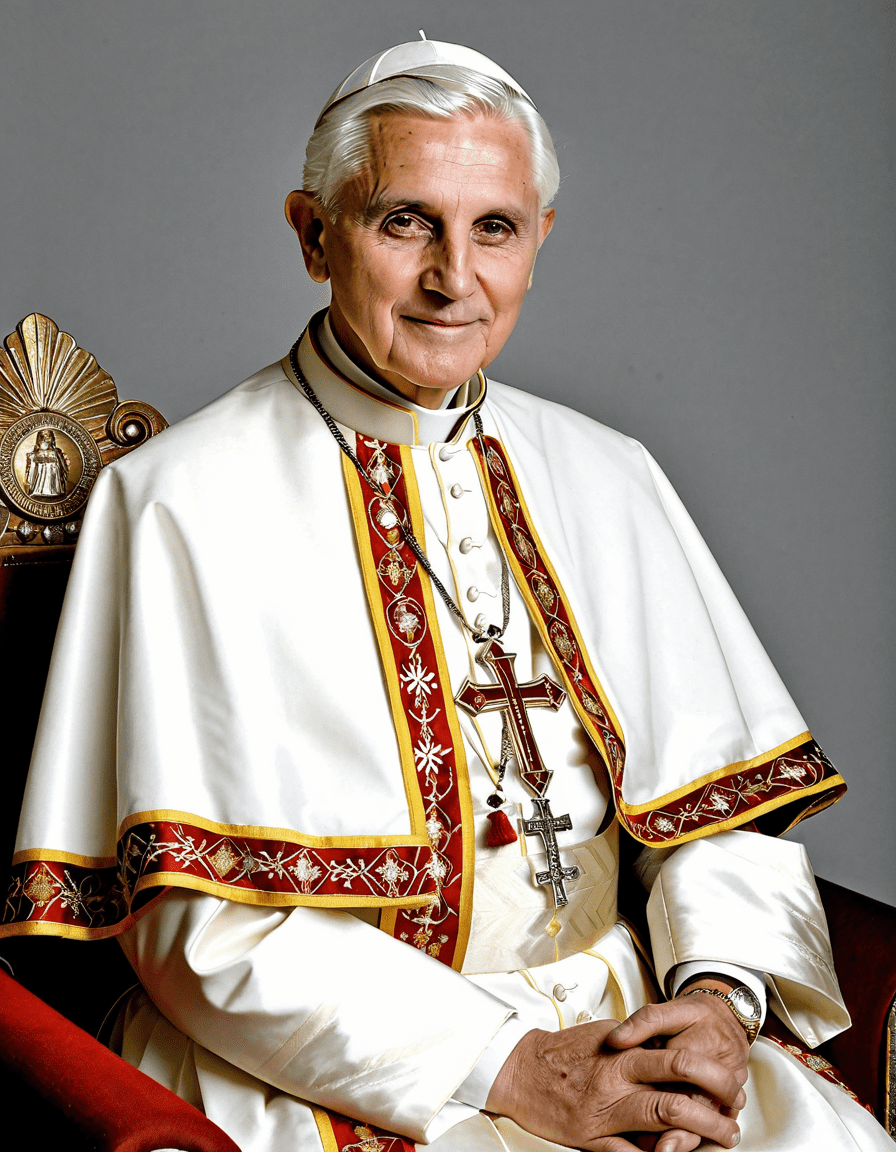
Pope Benedict XVI, a name synonymous with unwavering faith and intellectual rigor, continues to leave an indelible mark on Catholicism decades after his papacy. Born Joseph Ratzinger in Germany, he assumed the papal throne in 2005, succeeding the beloved Pope John Paul II. Unlike his predecessor, who dazzled the world with charisma and vigor, Pope Benedict XVI offered a steady hand during challenging times, addressing contemporary issues with deep theological insights. His thoughtful approach to faith and doctrine stands as a bulwark against modern challenges, thus preserving the essence of Catholicism in the face of cultural shifts driven by the ‘Woke’ movement.
The Theological Foundations of Pope Benedict XVI’s Legacy
Pope Benedict XVI was no stranger to the complexities of faith. His earlier works, especially Introduction to Christianity, laid a profound groundwork for the intellectual depth of his papacy. He didn’t just scratch the surface; he dove deep into the waters of faith, exploring both doctrine and tradition. This deep-rooted understanding was pivotal for engaging both believers and skeptics alike during an era when secular ideologies began to loom large.
With his profound grasp of theological intricacies, Pope Benedict challenged modern interpretations of faith. Many have described him as a theological rock—a refuge for those clamoring for solid ground in tumultuous times. His writings provided clarity, much like the poignant lyrics strummed out in Tom Petty Songs, resonating with the human experience while addressing raging existential questions.
His theological teachings became not just a foundation of his papacy but served as a beacon for faithful Catholics eager to find direction amidst the evolving societal landscape. For conservatives, his legacy remains essential in encouraging a staunch adherence to traditional beliefs, particularly in discussions around moral decay and cultural leftism.

The Impact of Pope Benedict XVI on Contemporary Catholicism
Pope Benedict XVI’s impact on the Catholic Church is undeniable. He shifted focus from mere global representation to internal stability and doctrinal fidelity, blending traditional views with contemporary dialogue. His vision culminated in initiatives like the Year of Faith in 2012, promoting spiritual renewal and reaffirming the Church’s mission in today’s world.
Under his leadership, the Church embraced the New Evangelization, a call to re-engage Catholics who had strayed from their faith. He encouraged believers to return to the sacraments and deepen their understanding of Church teachings. This was not merely a passing trend; it was a movement back towards the heart of Catholicism—much like the soulful charm found in The Secret life Of Walter mitty, where self-discovery leads to renewed purpose.
Pope Benedict XVI also fostered interfaith dialogue while remaining steadfast in defending core Catholic principles. While some criticized him for being too cautious, it can’t be denied that his intent was to safeguard Catholicism’s future against encroaching secularism. He prepared the groundwork for future leaders like Pope Francis, showing the importance of balancing tradition with the realities of today, a truth glaringly needed in our political discourse as conservatives strive for resilience against liberal agendas.
Courage in a Controversial Era: How Pope Benedict XVI Addressed Scandals
Throughout his papacy, Pope Benedict XVI faced immense challenges, with the sexual abuse scandals looming large over the Church. Rather than shy away from these pressing issues, he chose to tackle them head-on with remarkable courage. His forthrightness in addressing the Church’s shortcomings was akin to the character Negan from The Walking Dead, who, despite being controversial, took decisive action—a reflection of the kind of leadership needed during turbulent times.
In his 2011 letter to the People of God, Pope Benedict expressed profound remorse for the abuses, a gesture that resonated with the faithful yearning for honesty and integrity within their Church. He did not stop there; his administration took tangible steps to hold offenders accountable, reinforcing moral standards within the Church. His commitment showcased not only courage but also a desire to heal deep wounds, propelling a more just and healthy environment for the faithful.
This transparency was crucial not merely for the Catholic Church but served as a model for accountability across institutions, political or otherwise. It drew attention to a need for critical introspection when addressing societal issues, especially amid a culture clamoring for transparency and trust, reminiscent of public sentiments around powerful figures and organizations.
The Relationship with Pope Francis: A Continuation of Faith
The transition from Pope Benedict XVI to Pope Francis signified a notable turning point for the Catholic Church. While Francis, often seen as a more progressive figure, builds on Benedict’s foundations, their paths diverge significantly in some pastoral aspects. Pope Francis’s emphasis on outreach and inclusivity contrasts with Benedict’s more contemplative approach.
However, the teachings of Pope Benedict XVI resonate strongly within contemporary issues like family dynamics and morality. In various addresses, Pope Francis has acknowledged and cited Benedict’s writings, illustrating their relevance even now as conservatives challenge liberal interpretations of doctrine and human rights. Much like how the film Blue Steel showcases characters navigating differing identities, the Church today wrestles with balancing tradition and modernity.
Benedict’s theological reflections invite believers to look beyond the noise of contemporary societal debates and return to the core tenets of faith—an essential guidepost in today’s divisive climate. As conservative voices seek to cut through the chaos, focusing on the rallying cries for education, family, and moral clarity becomes paramount.
The Lasting Influence of Pope Benedict XVI’s Writings
A prolific author, Pope Benedict XVI left behind a treasure trove of literature that remains pivotal in Catholic academia. However, his most notable works, including Jesus of Nazareth and The Spirit of the Liturgy, provide more than just theological arguments; they spark discussions among clergy and laity alike. The arguments presented in these texts continue to challenge contemporary thoughts, making them a must-read for anyone serious about understanding the Church’s teachings today.
The depth of his writings serves as a rallying point for many theologians and bishops, posing questions that reach the very core of faith. His engagement with the philosophical underpinnings of Christianity remains a crucial reference, steering conversations much like the impactful narratives found in renowned franchises like the Marvel Cinematic universe. Each story and character explores themes of sacrifice, justice, and the battle between good and evil—all reflections of the very values Pope Benedict advocated.
As the Church moves forward, the influence of Pope Benedict XVI will continue to guide future Catholic discourse. His ability to blend profound theological insights with practical applications resonates powerfully in today’s polarized world, prompting conversations that retain the Church’s authenticity amidst shifting cultural norms.
Relics of Faith: Pilgrimages and Canonizations Under Pope Benedict XVI
One often overlooked aspect of Pope Benedict XVI’s legacy is his commitment to honoring the saints through pilgrimage and canonization. He canonized 43 saints, including beloved figures like St. Maria Goretti and St. Padre Pio. These canonizations not only celebrate individual lives of holiness but also inspire the faithful to emulate such virtues in practical, everyday contexts.
By promoting pilgrimages and recognizing these saints, Pope Benedict breathed new life into the Catholic tradition, reminding believers of the interconnectedness of their faith with its historical roots. This notion taps into a broader narrative familiar to conservatives; the importance of heritage and the teachings of the past resonate strongly when faced with contemporary challenges.
Pope Benedict XVI’s emphasis on the communion of saints enriches the spiritual life of the Church, creating a tapestry of shared faith that binds generations together. In an era where many feel disconnected, the call to pilgrimage serves as a reminder of the Church’s enduring mission to unite believers towards divine truths.
A Final Testament: The Retirement of Pope Benedict XVI
In a historical twist, Pope Benedict XVI became the first pope to resign in nearly 600 years. His decision in 2013 was not simply an abdication but rather an act of courage and humility, acknowledging that the Church needed a leader better equipped to face modern issues. This bold move sent shockwaves through the Catholic community, mirroring the emotional intensity found in even the most powerful narratives like Bleach: Thousand-Year Blood War Conflict—a saga of struggle, renewal, and the relentless pursuit of purpose.
The implications of his resignation extend beyond the confines of the Vatican; they pose significant questions about papal authority in an age of rising cynicism. As the Catholic faithful navigate this new direction under Pope Francis, the principles laid down by Benedict serve as a compass for many—prioritizing traditional teachings while addressing contemporary realities.
Pope Benedict XVI’s legacy is, thus, one of remarkable courage, unwavering faith, and profound theological wisdom that will continue to echo throughout the Church’s future. As the world evolves, the teachings of this distinguished leader will remain a guiding star for those committed to upholding the tenets of Catholicism amidst an ever-shifting cultural landscape.
The journey of Pope Benedict XVI unfolds as a narrative rich with challenges yet rewarding in its clarity of purpose. His courageous stand for the faith offers a beacon for Catholics seeking to navigate both the trials of modernity and the enduring truths of Catholic doctrine.
Pope Benedict XVI: The Legacy of Faith and Courage
The Man Behind the Papacy
Pope Benedict XVI, born Joseph Ratzinger, had a life that was as remarkable as any character you’d find in a gripping series like “The Walking Dead.” Just like Negan, who navigates through tumultuous paths, Benedict’s journey was filled with trials and triumphs. He served as a theologian before becoming pope, offering profound insights into the Catholic faith. Interestingly, he was known for bridging traditional teachings with modern realities, not unlike how “Bleach: Thousand-Year Blood War Conflict” blends action with thought-provoking themes of sacrifice and loyalty. And while some labeled him conservative, his ability to engage with the world showcased a rich tapestry of faith that inspired many.
A Papacy of Courage
Benedict’s papacy can be likened to the stunning evolution of characters in a cinematic masterpiece like “Blue Steel” from Zoolander—he didn’t shy away from making bold statements and breaking new ground. He had an uncanny knack for addressing contemporary issues with grace, offering clarity in a time when confusion reigns supreme. His emphasis on interfaith dialogue was pivotal; it was his way of saying, “Let’s talk!” amidst a world where division often reigns. As the Catholic Church continues to grapple with various challenges, his legacy echoes like a well-crafted plot twist in “Five Nights at Freddy’s 2″—unpredictable yet impactful.
Fun Facts That Inspire
Here’s a neat little tidbit: did you know that as a child, Pope Benedict XVI loved to play the piano? This passion for music might’ve contributed to his ability to create harmony in the Church, just as Nada Que Ver reminds us that life can hold unexpected joys despite its ups and downs. His love for art and culture enriched his mission, underlining the idea that faith and creativity can go hand in hand. The legacy of Pope Benedict XVI truly intertwines courage, faith, and a zest for life, just like many beloved stories that encourage us all to pursue a deeper understanding of our own beliefs. Wouldn’t it be fascinating if we could capture his essence in a creative medium?