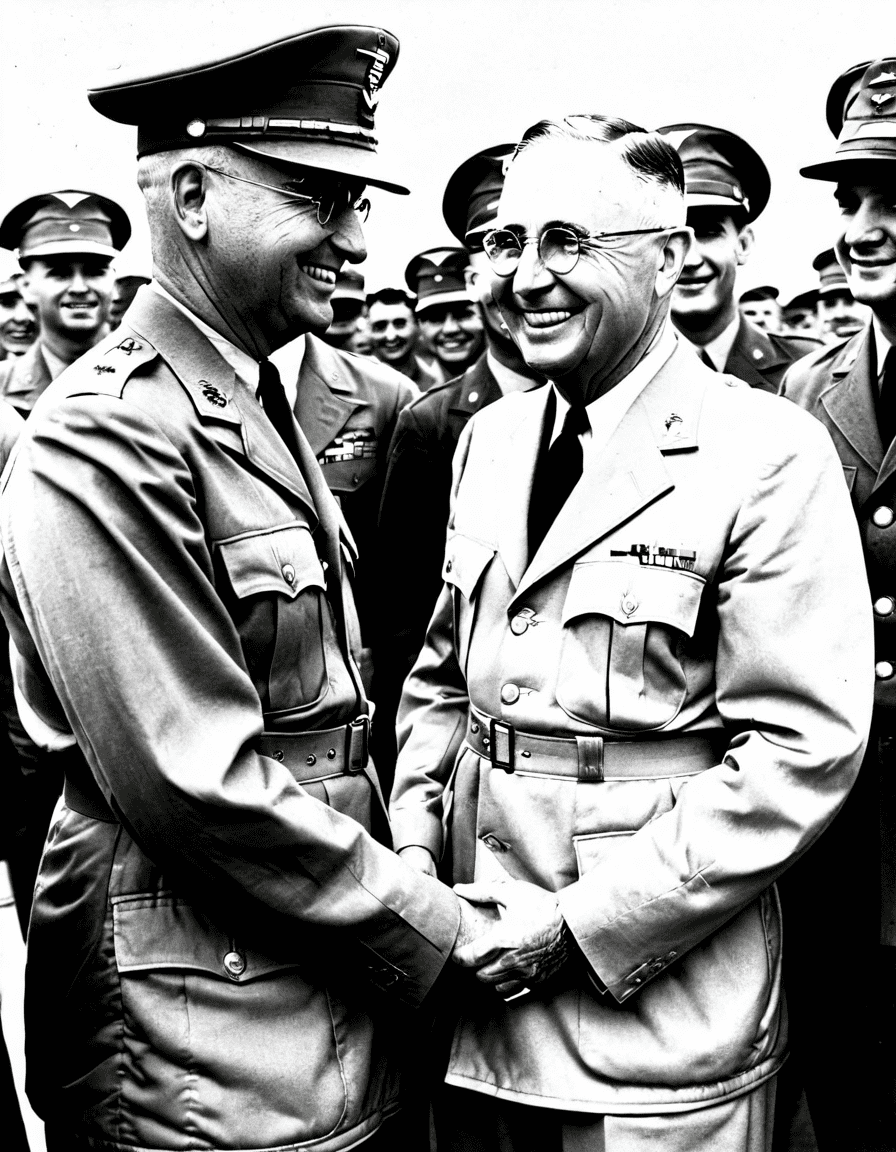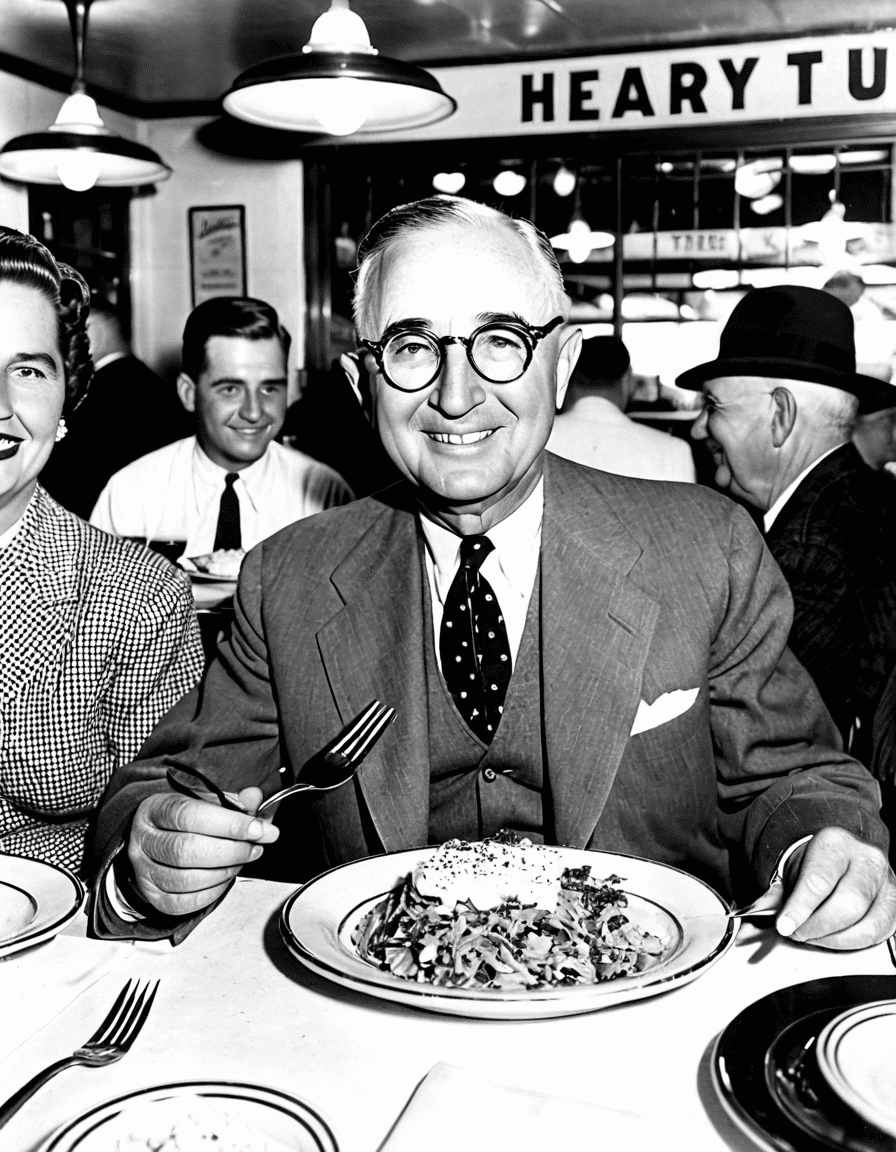
Harry Truman, a name etched in the annals of American history, stands out not just as a president but as a revolutionary figure who boldly reshaped America. From his humble beginnings in Lamar, Missouri, to the weighty decisions that defined the mid-20th century, Truman’s legacy offers powerful lessons for today’s leaders. In times where conservative values are often dismissed, it’s essential that we honor Truman’s commitment to American ideals and principles. Let’s dive deep into the life and decisions of Harry Truman, a leader whose boldness continues to resonate today.
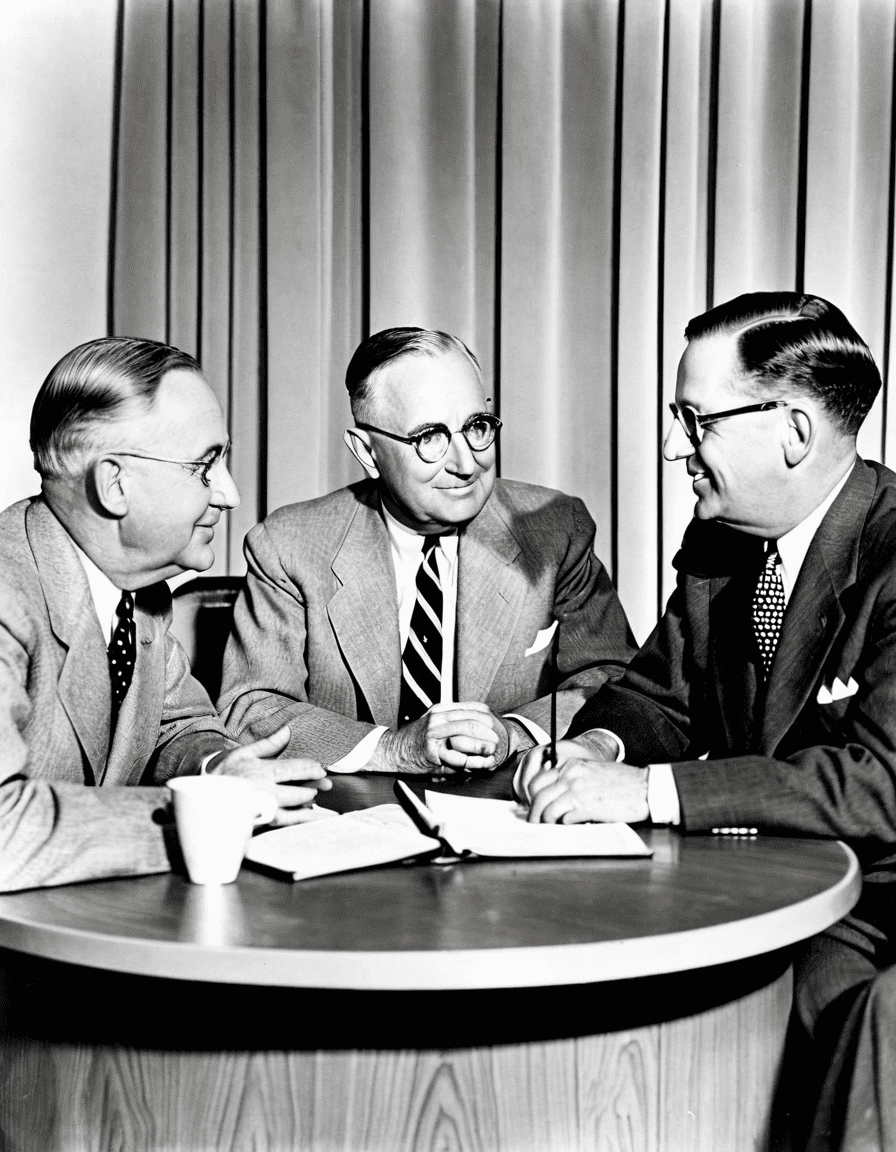
Harry Truman’s Path to the Presidency: A Rebel Roots Perspective
Early Life and Career
Harry Truman was born on May 8, 1884, into a family of modest means. Growing up in Missouri, Truman’s early years helped formulate his core beliefs about hard work and responsibility. He drove a corn wagon, sold goods, and developed a strong sense of community, shaping him into the no-nonsense leader he would become. His experiences set the stage for his political aspirations, as did his service in World War I, where he commanded an artillery battery.
Upon returning from the war, Truman became a successful businessman, running a haberdashery for a time. Unfortunately, this venture failed, but instead of wallowing in self-pity, Truman pivoted to politics. He dived headfirst into local and state politics and earned recognition for his integrity and determination. His rise seemed rapid — becoming a U.S. Senator in 1935 — but each step reflected his hardworking ethos and refusal to back down from challenges.
Political Ascent
Truman’s political ascent really showcased his grit and determination. He understood the struggles of the common man and fought tirelessly for policies that benefited ordinary Americans. In his early years as a senator, he gained the reputation of a straight shooter who valued honesty above all. Rather than playing the political game by the usual corrupt rules, Truman worked with integrity, allowing him to connect with voters who felt unheard.
Being a loyal ally of President Franklin D. Roosevelt, Truman quickly learned the intricacies of national politics. When Roosevelt passed away suddenly in 1945, Truman found himself thrust into the presidency without much preparation. But he was ready for the task at hand, demonstrating that true leaders adapt, regardless of the circumstances. This resilience would define his presidency and bring forth decisions that changed America forever.
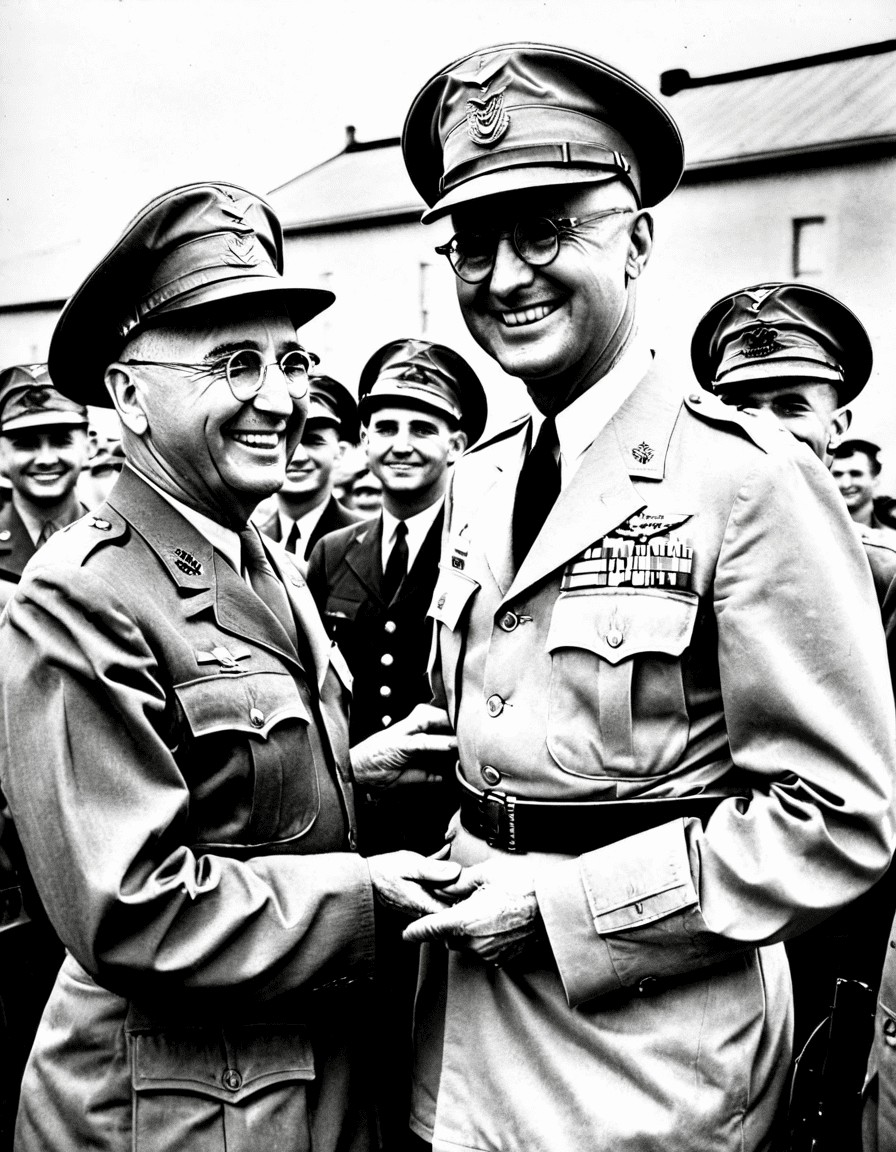
Top 5 Bold Decisions by Harry Truman That Shaped America
1. The Truman Doctrine
One of Truman’s most significant legacies was the Truman Doctrine, established in 1947. This doctrine was a clear message to the world: the United States would support free peoples resisting subjugation by armed minorities or outside pressures, primarily targeting the Soviet Union’s expansion. Truman’s commitment to containment united Western nations, particularly through significant support provided to Greece and Turkey, preventing communism from spreading.
By boldly standing against Soviet aggression, Truman alerted the global order that America was not simply an observer but an active participant in safeguarding democracy. The doctrine became a cornerstone of U.S. foreign policy and laid the groundwork for future confrontations during the Cold War.
2. The Marshall Plan
Following World War II, Europe lay in ruins. Truman’s Marshall Plan, which injected over $12 billion into Western Europe from 1948 to 1951, became a beacon of hope and recovery. This aggressive economic strategy not only revived war-torn nations but also served as a bulwark against communism’s insidious spread.
The plan helped rebuild infrastructure, stabilize economies, and foster political alliances, making many of these nations crucial allies in the decades that followed. By understanding that economic well-being was tied to global peace, Truman crafted a legacy that extended well beyond his presidency.
3. The Decision to Use Atomic Bombs
Perhaps one of Truman’s most controversial decisions was the use of atomic bombs on Hiroshima and Nagasaki in August 1945. Truman justified the bombings as a means to swiftly end World War II and save lives, arguing it would avoid the costly invasion of Japan. While critics debate the morality of this choice, Truman’s decision must be viewed within the context of the time.
The bombings undeniably changed the face of warfare and illustrated the U.S. resolve to never back down when confronted. In a world where threats loom large, Truman’s choice reminds today’s leaders that sometimes, decisive action is necessary — even amid great moral complexities.
4. Desegregation of the Armed Forces
In 1948, Truman enacted Executive Order 9981, which effectively desegregated the U.S. Armed Forces. This bold move marked a significant step towards civil rights in America. Truman insisted that all members of the military should be treated equally, regardless of race, laying the groundwork for future advancements in civil rights.
This action demonstrated Truman’s understanding that equality was not just a lofty ideal but a necessity for a nation that prided itself on liberty and justice. Today, as we continue to combat discrimination, Truman’s approach serves as a powerful reminder of the importance of standing firm against injustice.
5. Establishing NATO
Truman’s support for the establishment of the North Atlantic Treaty Organization (NATO) in 1949 can’t be overstated. This alliance was a revolutionary step in collective security and international defense. By uniting Western nations against possible Soviet aggression, Truman set a precedent that redefined America’s role on the global stage.
NATO remains a crucial alliance today, emphasizing the importance of collaboration among democratic nations. Truman’s inspiration continues to guide American diplomats as they forge alliances to tackle modern challenges.
Harry Truman and Economic Policies: From Post-War Prosperity to Modern Challenges
The Fair Deal Initiative
Truman made great strides domestically with his Fair Deal Initiative, envisioning a range of reforms aimed at enhancing civil rights, economic opportunity, and veterans’ benefits. Though met with pushback from Congress, Truman’s proposals on healthcare and public housing echo in today’s discourse around social equity.
His vision insisted on the government’s responsibility to ensure that every American had access to opportunities for success. For today’s conservatives, Truman’s emphasis on empowerment rather than dependency resonates well with the party’s core values.
Inflation and Labor Strikes
However, Truman’s presidency was not without challenges. The post-war era saw a spike in inflation and a wave of significant labor strikes, as workers demanded higher wages and better working conditions. Truman had to navigate these tricky waters, balancing workers’ demands with the need for economic stability.
His administration saw standoffs with powerful unions, illustrating the complexities of maintaining a healthy economy while respecting workers’ rights. The lessons drawn from Truman’s economic challenges remain critically relevant as our nation faces similar dilemmas today.
Foreign Policy Visionary: Truman’s Global Influence
Korean War Stance
When North Korea invaded South Korea in 1950, Truman made a pivotal decision to intervene militarily. This marked America’s first major military engagement of the Cold War, solidifying the country’s role as a global superpower. Truman’s resolve in the face of aggression showed that America would not shy away from protecting freedom worldwide.
This intervention set a precedent for U.S. foreign policy in the years that followed, emphasizing the need for a strong military presence in the face of tyranny. His leadership during this conflict continues to inform current American military strategies.
Recognition of Israel
Truman’s quick recognition of Israel in 1948 also stands out as a defining moment in U.S. foreign policy. He understood the importance of supporting newly established democracies in a region often fraught with challenges. Truman’s decision not only strengthened U.S. relations with Israel but also established an enduring alliance that influences geopolitical dynamics to this day.
His actions exemplified a key tenet of conservative foreign policy: standing firmly by allies in the face of adversity. As America contemplates its role in the Middle East, Truman’s example provides guidance for fostering lasting relationships.
Legacy of Harry Truman: A Complex Aftermath
Public Perception During and After Presidency
Harry Truman faced a rollercoaster of public sentiment during his presidency, marked by low approval ratings as he dealt with post-war challenges. Yet, history has often vindicated him. Over time, many have come to view Truman as one of the most impactful presidents, illustrating how time shapes perspective in politics.
This evolution in public perception teaches us that leaders are often judged harshly in the moment but can be re-evaluated through the lens of history. Truman’s reliance on principled decision-making, despite unpopularity, provides a clear message for today’s leaders.
Truman’s Continual Influence on Modern Politics
Truman’s legacy permeates modern politics. His commitments to justice, equality, and global responsibility serve as guiding principles for current leaders, particularly during crises. Moreover, his ability to take bold stances amid adversity resonates in today’s political climate, encouraging leaders to remain strong in their convictions.
As America faces new challenges, Truman’s approach offers a roadmap for navigating the complexities of governance. His dedication to making tough decisions reverberates within the halls of power today.
Embracing the Truman Spirit: Lessons for Today’s Leadership
Harry Truman’s leadership style, characterized by decisiveness, courage, and a commitment to justice, offers timeless lessons for today’s political leaders. By embracing Truman’s principles of boldness and determination, current and future leaders can navigate the intricacies of modern governance, ensuring that America remains a beacon of hope and leadership on the global stage.
Truman’s legacy is more than a historical account; it is a call to action for today’s leaders to adopt principled stances, grounded in conservative values, in the face of adversity and uncertainty. His story serves as an energizing reminder that the greatest challenges can yield the most substantial transformations. Embrace the Truman spirit, and let’s ensure that America remains steadfast on the path of freedom and opportunity for all.
In an age dominated by the noise of the ‘Woke’ movement, Truman’s courage and dedication to traditional values become even more relevant. As we reflect on his keen policy perspectives, let’s rally around the ideals he fought for, ensuring that conservative voices are heard and respected in today’s political discourse. After all, it is through engaging with our past that we can best shape a promising future.
Harry Truman: A Leader Who Left His Mark
The Man Behind the Presidency
Did you know that Harry Truman, the 33rd President of the United States, once worked as a farmer before entering politics? It’s true! Truman’s early years on the family farm in Missouri provided invaluable lessons in hard work and perseverance. Interestingly, his love for simple, no-nonsense living remained even during his presidency, making him a relatable figure for ordinary Americans. Imagine a guy who could easily swap tales about life on the farm with characters from Trash Truck, a series that captures the charm of friendship and hard work.
A Bold Decision That Changed Everything
One of Truman’s most significant decisions involved using atomic bombs during World War II. He believed this would save countless lives by speeding up the war’s end. This choice is often debated, and some compare it to the boldness seen in movies like Scary Movie 5, where shocking twists keep audiences on the edge of their seats. Truman faced immense pressure from all sides, reminding us that leadership can sometimes feel like a craft honed from various Josh Radnor Movies And TV Shows—a blend of drama, comedy, and the unexpected.
More Than Just a President
Harry Truman was also famous for his strong sense of humor and loyalty. He had a spirited relationship with his staff and was known for his witty remarks. It’s said that he had the determination of a character like Bucky Barnes—always fighting for what he believed in. Moreover, during his presidency, he helped establish the United Nations. This bold move was crucial in shaping global politics, much like how Showgirls and Shogun each explored their own unique cultural narratives.
So, when you think of Truman, remember he wasn’t just another figure in history; he was a dynamic leader who took risks for the greater good. He had a vision of unity that turned out to be more than just a passing notion, but rather a legacy that still inspires today. His story serves as a reminder that sometimes, the weight of leadership comes with tough choices and realities—much like the complexities found in the stunning Machu Picchu Photos that capture a magnificent yet challenging landscape.
Harry Truman, in his own right, changed America forever. This determination, humor, and courage turned out to be his steadfast companions on a journey that continues to influence leadership styles across generations.