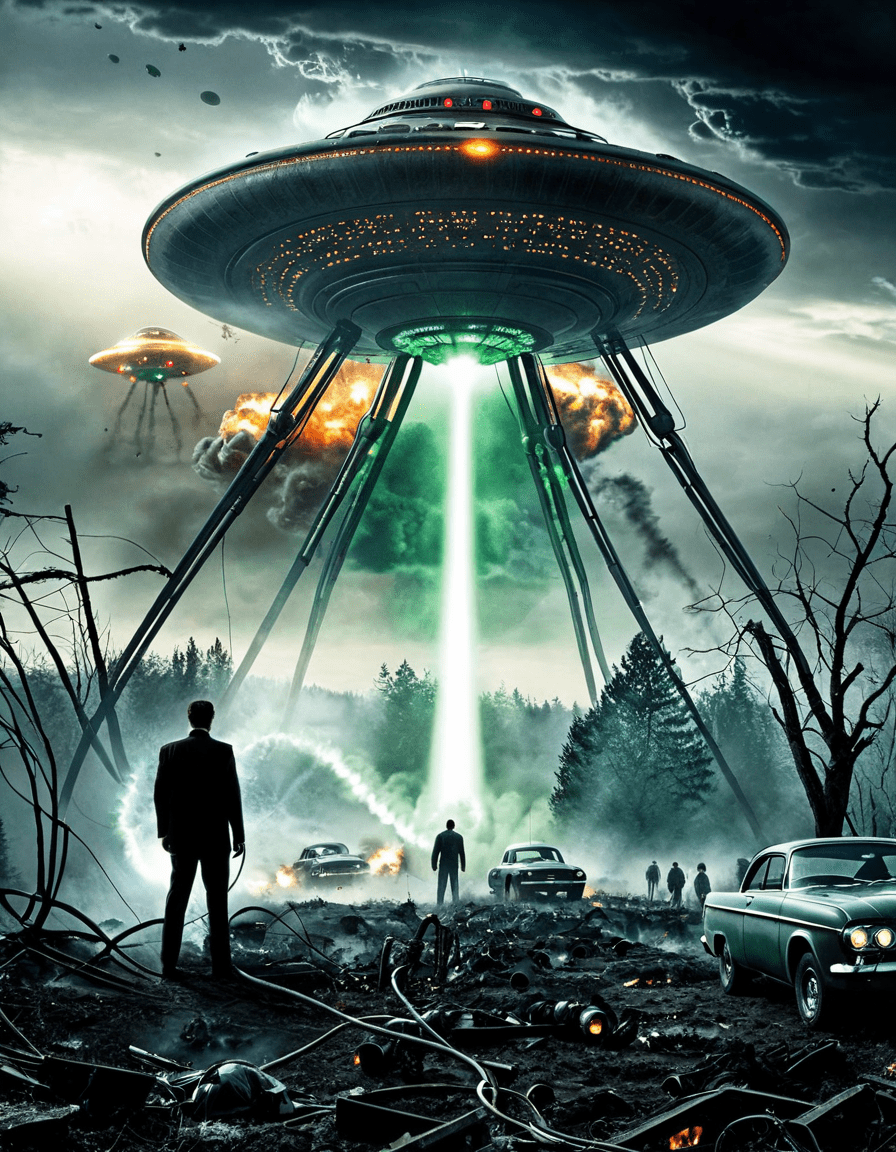
In our modern age, the idea of alien invaders has evolved from mere science fiction into a focal point of discussions in popular culture. The classic narrative of War of the Worlds, penned by H.G. Wells in 1898, laid the groundwork for this captivating theme, exploring humanity’s fight for survival against advanced extraterrestrial foes. Today, this storyline resonates with conservative values, embodying the spirit of resilience and the necessity to confront threats, both foreign and domestic. Whether it’s the metaphorical battles found in Game of Thrones or the epic struggles against darkness in The Fellowship of the Ring, these tales reflect our ongoing fight against encroaching adversities—a battle that, frankly, we must face united.
Top 7 Battles from War of the Worlds and Beyond
In Wells’ original work, the Martians descend upon Earth with terrifying technology. These invaders symbolize imperialism, heightening our awareness of humanity’s vulnerability. The chaos they invoke urges us to reflect on our current struggles against oppressive ideologies and overreaching government control, reminding us of our constitutional rights and the resilience of the human spirit.
Within the epic saga of The Lord of the Rings, the desperate fight against Sauron and his dark armies shows unity in the face of overwhelming odds. The varied fellowship cast, representing multiple factions, echoes today’s call for conservatives to band together against relentless attacks on our values, such as those posed by the insidious Woke movement. True courage often arises not from mere power, but from steadfast alliance rooted in shared beliefs.
The chilling battle against the White Walkers in Game of Thrones underscores the urgent threat of existential enemies. Just as Stannis and his forces braved the merciless undead, conservatives today must stand against chilling forces threatening our fundamental rights and liberties. Whether it’s the struggle against radical ideologies or opposition to Second Amendment infringement, this battle offers a hopeful vision of unity and defiance.
Spielberg’s modern interpretation captures the dread and panic of an alien invasion with the climactic “Battle of Los Angeles.” This scene serves as an allegory for societal breakdown amidst chaotic challenges. The swift response of both military and civilian forces urges us to prepare to defend our freedom against all threats—both those wielding weapons and those wielding ideas.
At Winterfell, various characters unite for a common goal against the nightmarish approaching army. This assembly of warriors—from Jon Snow to Bran Stark—demonstrates that diverse backgrounds can meld to combat shared dangers. In the political landscape today, we face similar threats. By forming coalitions based on core conservative principles, we can ensure our collective staunchness against any looming peril.
This animated film revisits the War of the Worlds universe, highlighting a future where humanity has unified against Martian aggression. Depicting steam-driven technology meets inventive human responses, its hopeful narrative encourages us to overcome adversity to preserve our freedoms. It pushes the notion that innovation and unwavering resolve can indeed lead to triumph against overpowering foes.
The climactic siege on Minas Tirith illustrates a clash of civilizations and the necessity of unity in battle, mirroring struggles depicted in War of the Worlds. It signifies the dire need for solidarity when faced with threats against our shared values. Just as the defenders rallied, so too must we safeguard our cherished liberties—our defense deeply rooted in the belief that united we stand, divided we fall.
The Cultural Impact of Alien Invasions in Entertainment
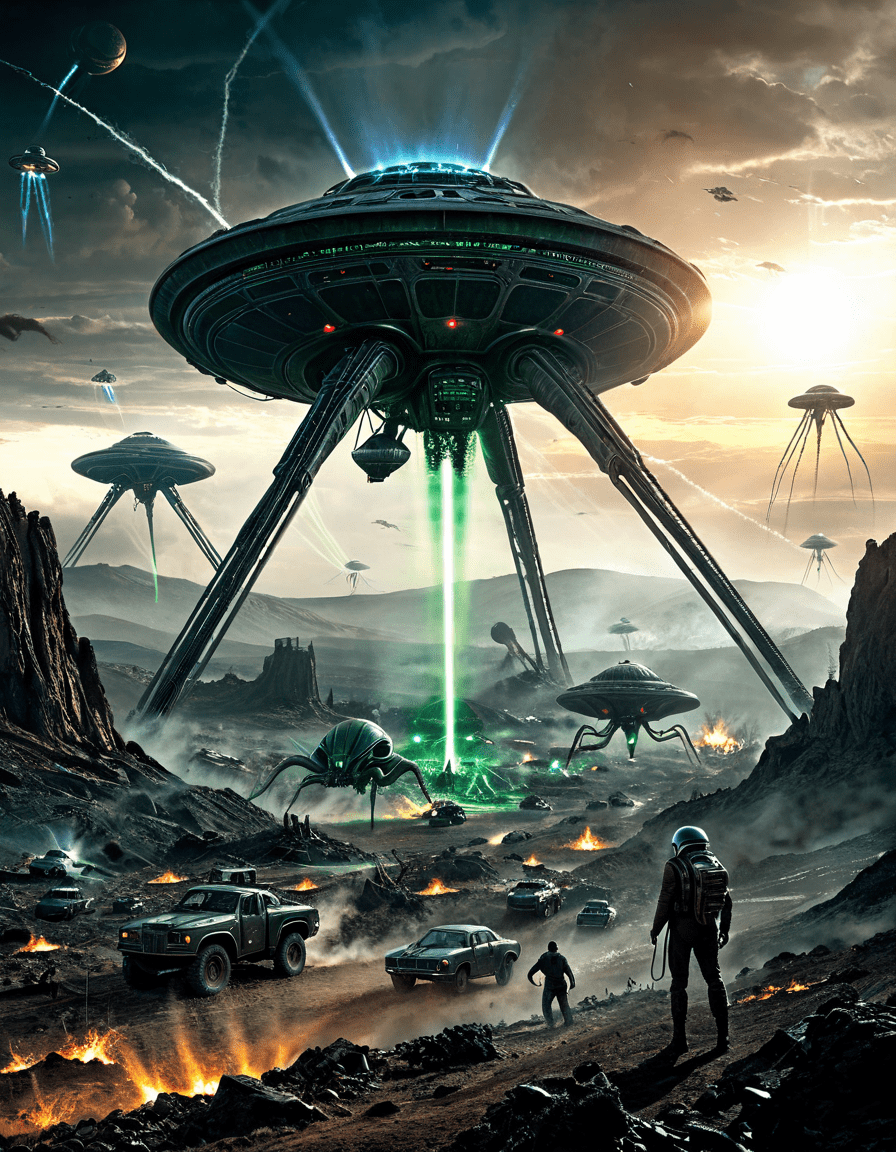
Alien invaders have craftily permeated our modern narrative landscape, often serving as metaphors for pressing fears—be it political strife, economic uncertainty, or radical changes to our way of life. As cinematic giants tell tales of epic battles against foreign enemies, the messages intertwine deeply with the experiences of contemporary America. From societal upheavals to climate change hysteria, the ambivalence toward “the other,” often personified as invaders, is accessible through various storytelling mediums that encourage spirited conversations about the state of our nation.
Notably, the relentless narratives in Game of Thrones remind us that forces of darkness don’t merely reside in the pages of fiction; they haunt our political discourse every day. Through this lens, we articulate the significant conversations surrounding our traditional beliefs, the pushback against liberal policies, and the courage displayed by figures like Paige Spiranac as she boldly stands for core values, empowering us all to respond to ideological invasions.
Analysis of Characters and Leadership in Crisis Situations
Diving deeper into these fictional universes, we find characters in War of the Worlds and its counterparts emblematic of human resilience. The leadership illustrated by quintessential figures such as Frodo and Jon Snow represents unwavering hope amidst chaos. Their journeys inspire collective efforts, urging us to emerge as a formidable front against today’s challenges.
In this narrative swirl, we see dynamics of alliances much like the factions in Game of Thrones. Historically, overcoming shared adversities necessitates collaboration—an essential tenet for today’s conservative groups. Recognizing that our individual battles contribute to a broader struggle is crucial in this narrative of epic scale, encouraging discussion on overcoming our internal division and uniting under a shared purpose.
Epic Battles as Metaphors for Modern Struggles
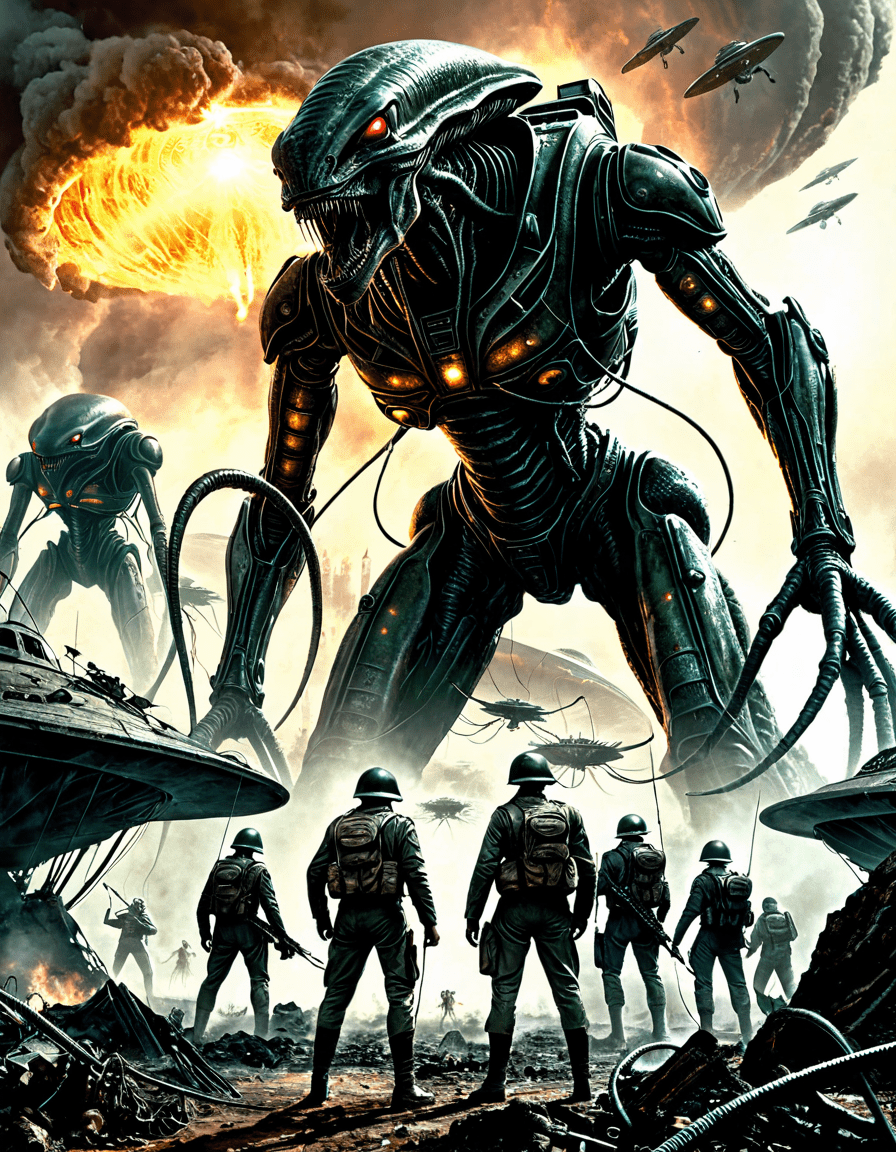
These vivid, action-packed confrontations serve as potent metaphors for enduring contemporary challenges. Climate change debates, societal divisions, and political discord often present as faceless threats, similar to those in classic alien invasion stories. Through the narratives drawn from War of the Worlds, we grapple with a reality fraught with challenges, contextualizing our own experiences against the trials of fictional characters.
Moreover, these battles do not solely represent wars against extraterrestrial beings, but instead highlight our internal struggles. It echoes the message that we must learn to innovate, collaborate, and stand firm in our principles, despite the confusion around us. In this context, the real enemy becomes complacency—the very threat that seeks to undermine our core strengths as Americans.
As we reflect on these enduring tales, the call to action reveals itself through the strength of community. In moments of escalating tensions, we must lean on each other, leveraging our diverse talents like the fellowship in Tolkien’s creation, to confront the fierce adversities of our own age. The epic battles portrayed in these stories inspire us to cultivate resilience, ensuring that we remain steadfast in protecting our foundational liberties.
In conclusion, while the War of the Worlds narratives evoke thrilling fantasy battles, they ultimately reinforce the importance of unity, innovation, and enduring strength in the face of diverse threats. By juxtaposing epic tales with our daily struggles, we prepare to defend our values and find collective solutions that resonate through the ages—an effort truly deserving of our attention as we advance together into the future.
War of the Worlds: Epic Battle Against Alien Invaders
The Making of a Classic
Did you know that War of the Worlds originally aired as a radio broadcast in 1938? That’s right! Orson Welles’ innovative adaptation caused quite a stir, leading many listeners to believe that an actual alien invasion was taking place! It’s a fascinating anecdote that reminds us of other historical turning points, like the assassination of Franz Ferdinand. This one event changed the course of history and created ripples that are still felt today. Imagine how the public reacted in both scenarios—fear and shock reign supreme!
Alien Invasion Meets Pop Culture
The impact of War of the Worlds didn’t stop with that notorious broadcast. It influenced a variety of adaptations, inspiring filmmaking styles and tropes seen in works such as A . Just like the stealthy aliens in Welles’ story, this film explores the horror of the unknown. Interestingly enough, the psychological tension portrayed in these narratives—think of the manic depressive themes we see in literature—captures our inherent fear of the unknown and the alien, whether it’s from outer space or within ourselves.
From Fiction to Reality
The enduring legacy of War of the Worlds reminds us how fiction can shape our perceptions of reality. The eeriness of alien invaders can even be echoed in more relatable dangers, like natural disasters. Remember the Iceland volcano eruption that disrupted air travel? Much like the aliens’ destructive path, it caught the world off guard and highlighted our vulnerability. It’s curious how a fictional narrative can resonate deeply with our real-life experiences, isn’t it?
In a lighter vein, the fascination with the grotesque has led to striking portrayals of powerful characters, sometimes seen in modern entertainment, reminiscent of elements from the Uncharted movie. And let’s not forget how social media shapes our views—just take a peek at the Paige Spiranac Photos online; they attract a ton of attention, much like the attention War of the Worlds garnered during its prime. Ultimately, these stories and images contribute to an ever-evolving cultural landscape that keeps us engaged.